
How to understand what’s on the charts page in Crypto Hopper
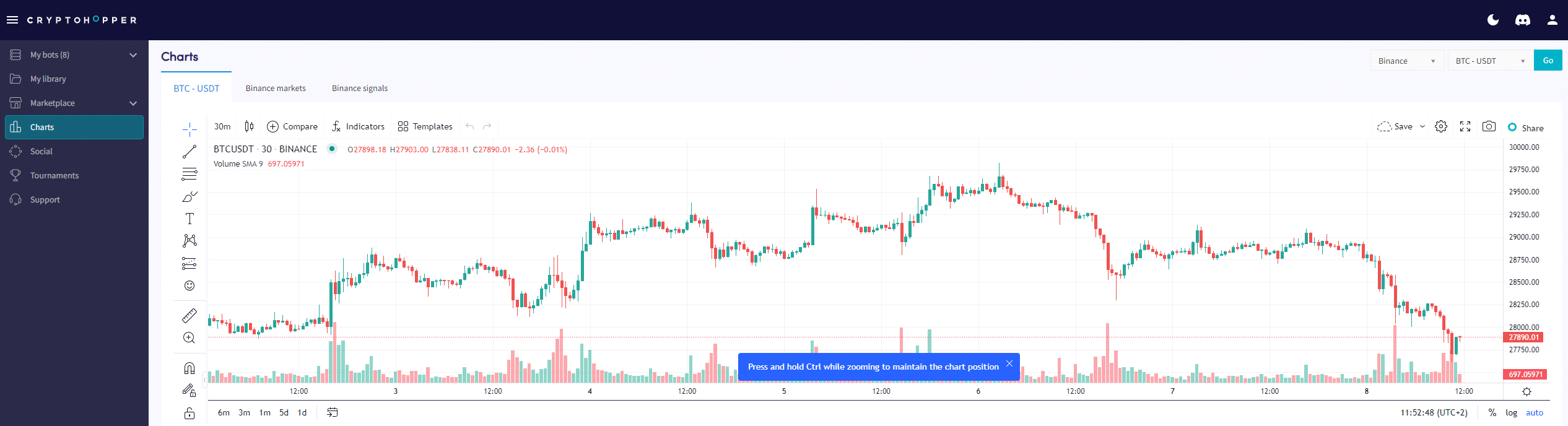
This guide explains what can be found on the graphs page.

Draw on the graph with the simple tools.
There are many tools that can be used to draw on the graph. Let’s start with the simplest tools.
Cross, dot and arrow
The price level is shown on the vertical and horizontal axes. The only difference is between the three aesthetics.
eraser
It should be used to delete previously made drawings by simply clicking on them.
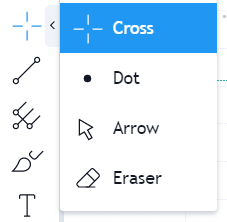
Trendline, Horizontal Line, Horizontal Beam, Vertical Line, Cross Line, Arrow, Beam, Continuous, Parallel Channel, Unconnected Channel, Regression Trend
These are all simple drawing tools that help you draw your analysis.
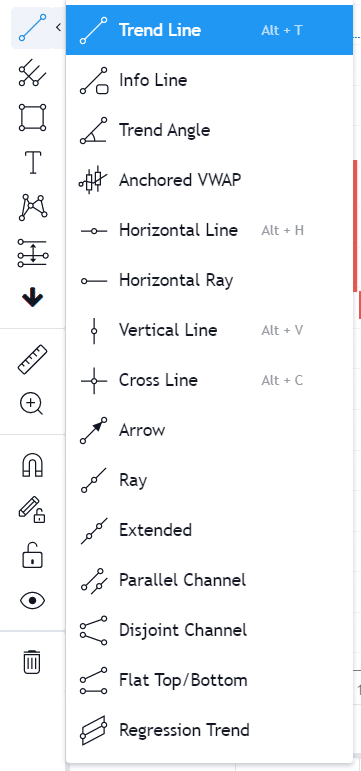
For example, a regression trend
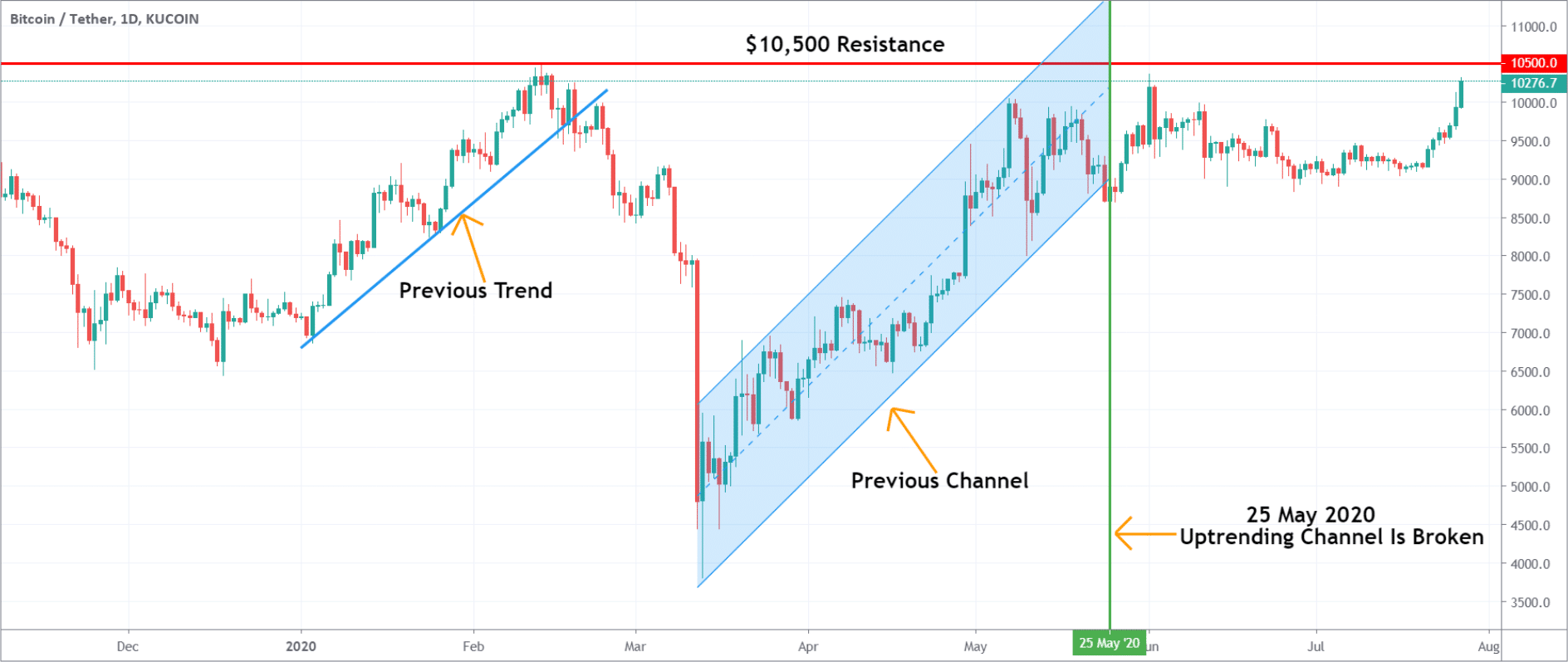
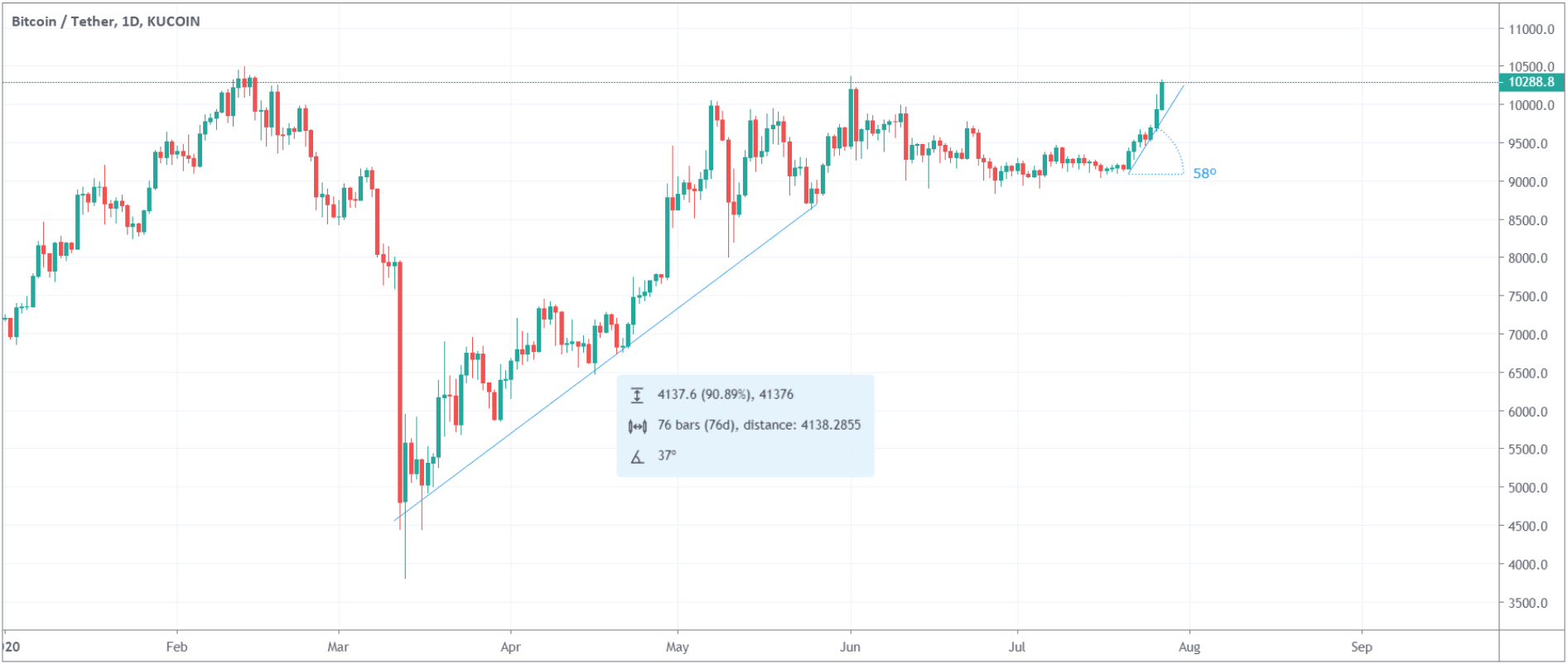
Another example, data line and trend angle.
The data line shows the percentage of growth or loss between two points as well as the distance (both in time and candles) and the trend angle. The trend angle simply shows the trend angle.
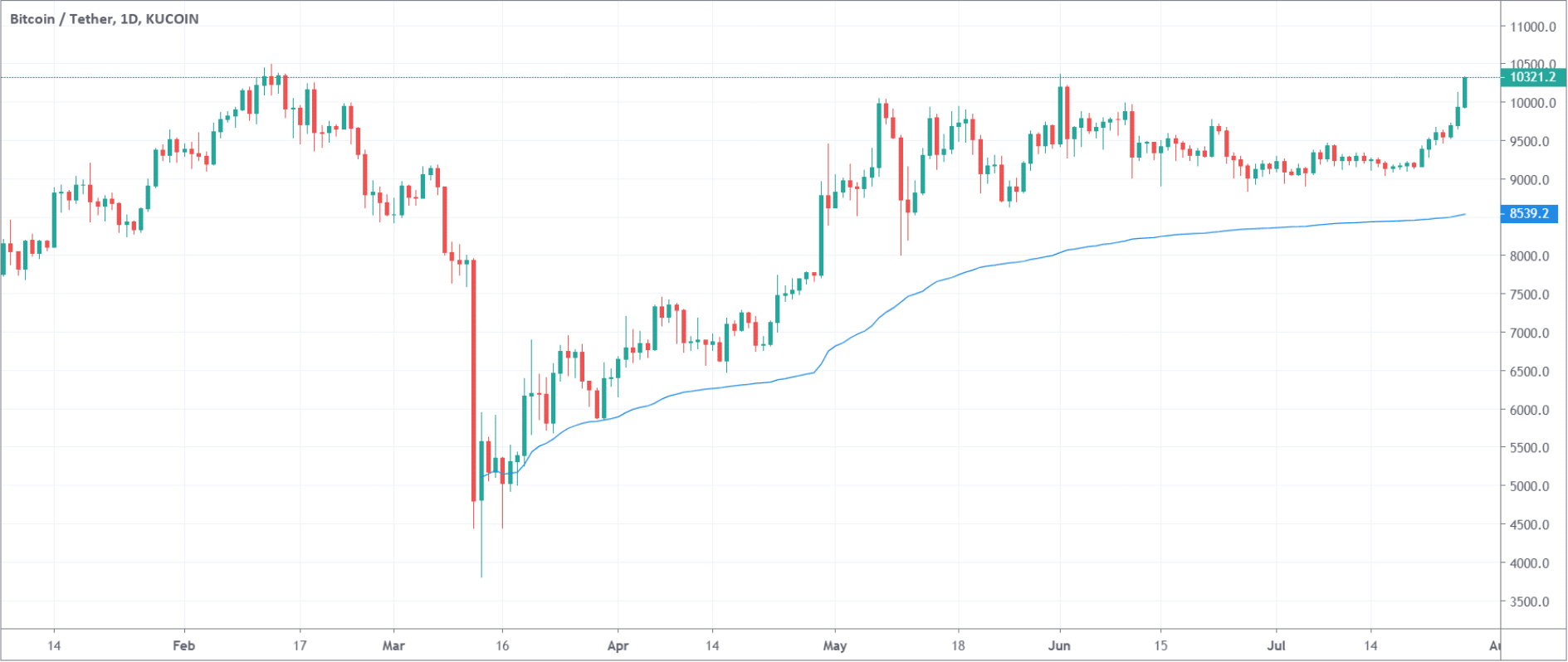
As a final example, VWAP is located.
Displays the Volume Weighted Average Price (VWAP) for a specific period. Click on the drawing tool, then on any point on the chart to see the VWAP up to the last price. VWAP can be thought of as a moving average to analyze whether you are in a bullish or bearish market. This tool is useful because it can be added to longer daily time frames (which is not possible with the regular VWAP indicator).
Draw on the graph with advanced tools
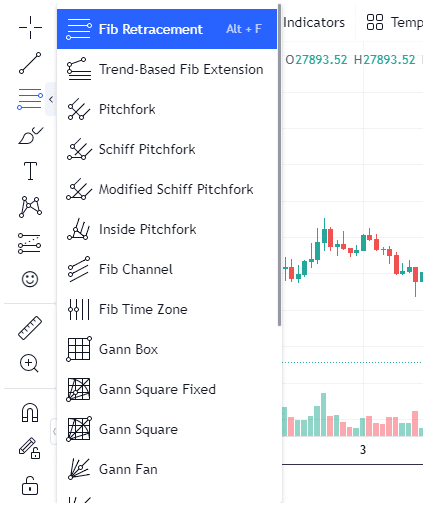
In addition to the easy tools, there are also more advanced tools. You can find different types of Fibonacci, Gannon, and Patchfork.
Painting section
Useful when sharing geographic figures.
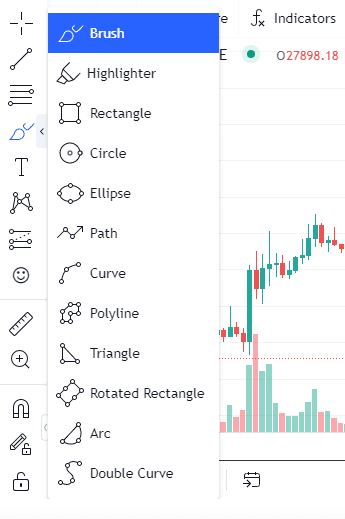
For example, use a rectangle to draw support and resistance levels. A triangle for bearish and bullish triangle patterns. Circles to indicate breakouts and more.
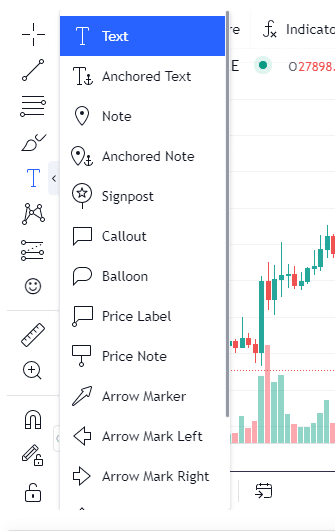
Text drawing tool
Use this to write important notes on your graph. Simply click the text button, then on the graph, and write whatever you want.
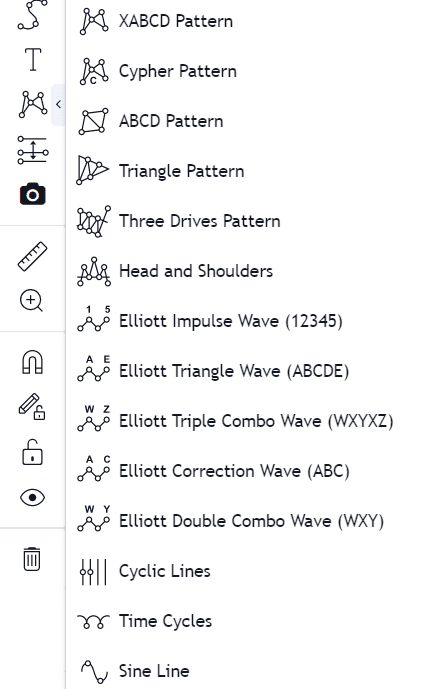
Templates
This section should be used to draw chart patterns such as the triangle pattern, head and shoulders, ABCD, and more.
Forecasts
This section should be used to make future predictions.
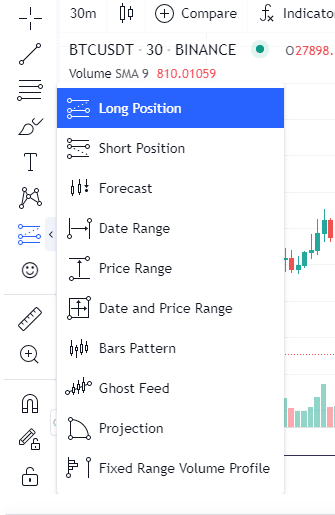
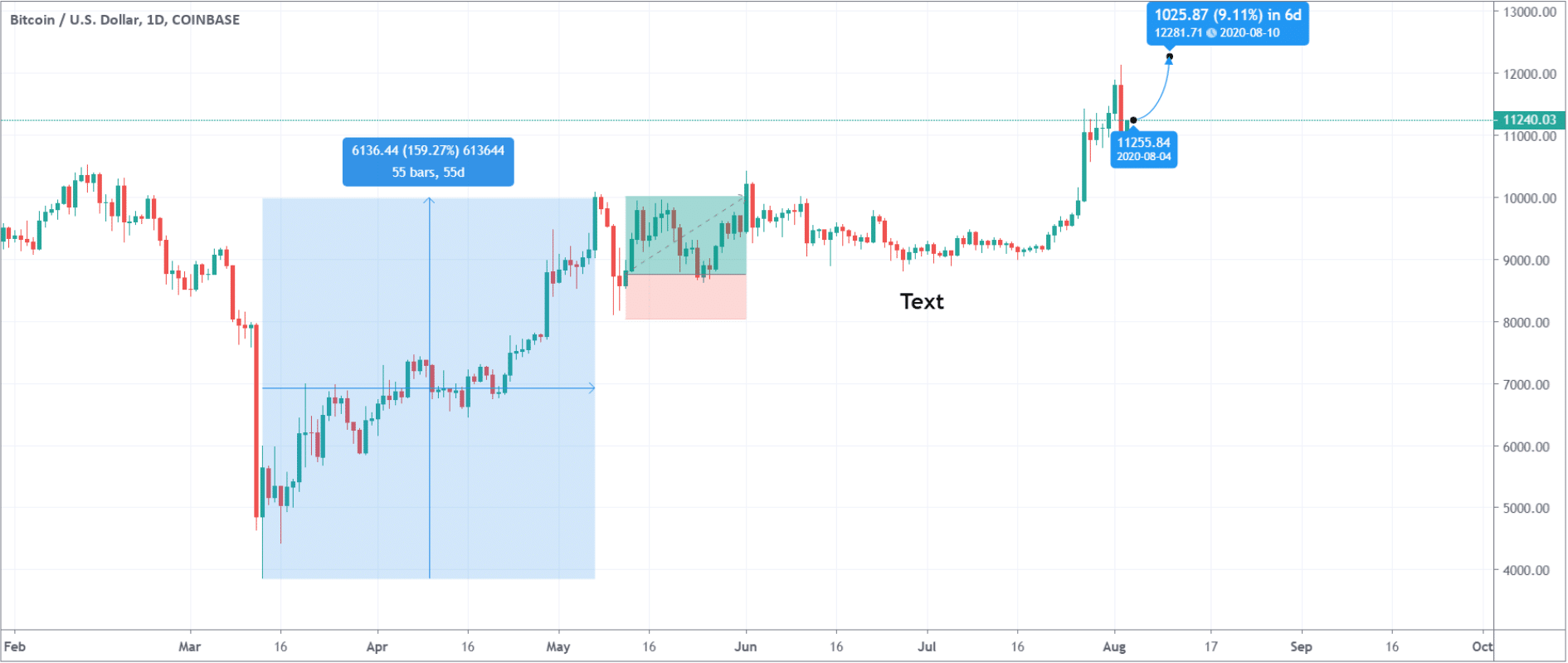
For example, the “Forecast” and “Maintenance” tools can be used to predict where the price might move in the future. The “Date and Price Range” can be used to see how long it took for the price to reach a certain percentage. “Long Position” and “Short Position” can be used to predict the profitability of a position or to perform manual backtests on how a strategy would have performed in the past.
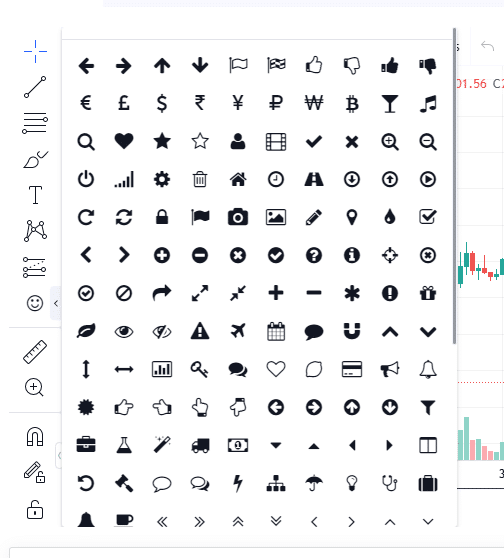
Smiley
This should be used to add ready-made images to your graph. Mainly used when producing content.
Additional information
Below the graph, there are two more tabs.
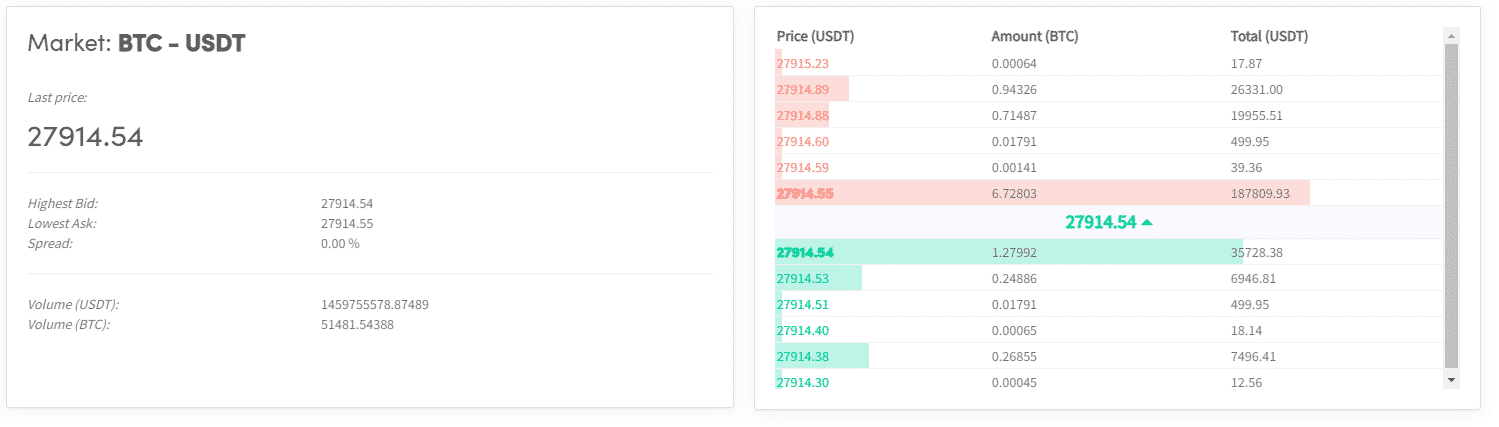
Market Tab
Displays details about the last price, highest bid, lowest ask, spread, volume, and volume in the selected currency.
Order Book Tab
Displays the 5 highest and 5 lowest orders, the quantity of orders, and the total cost. The order book changes all the time. When a large order is filled, it can lead to a high or low movement.
Markets tab
Markets
The Markets tab can be found at the top of the charts page . It displays all the currencies offered in the trade you have selected. You will find all the trading pairs that can be traded in the offered currency. The currencies you see are the currencies you have selected under “Currencies and Quantities” in Settings/Basic Setup.
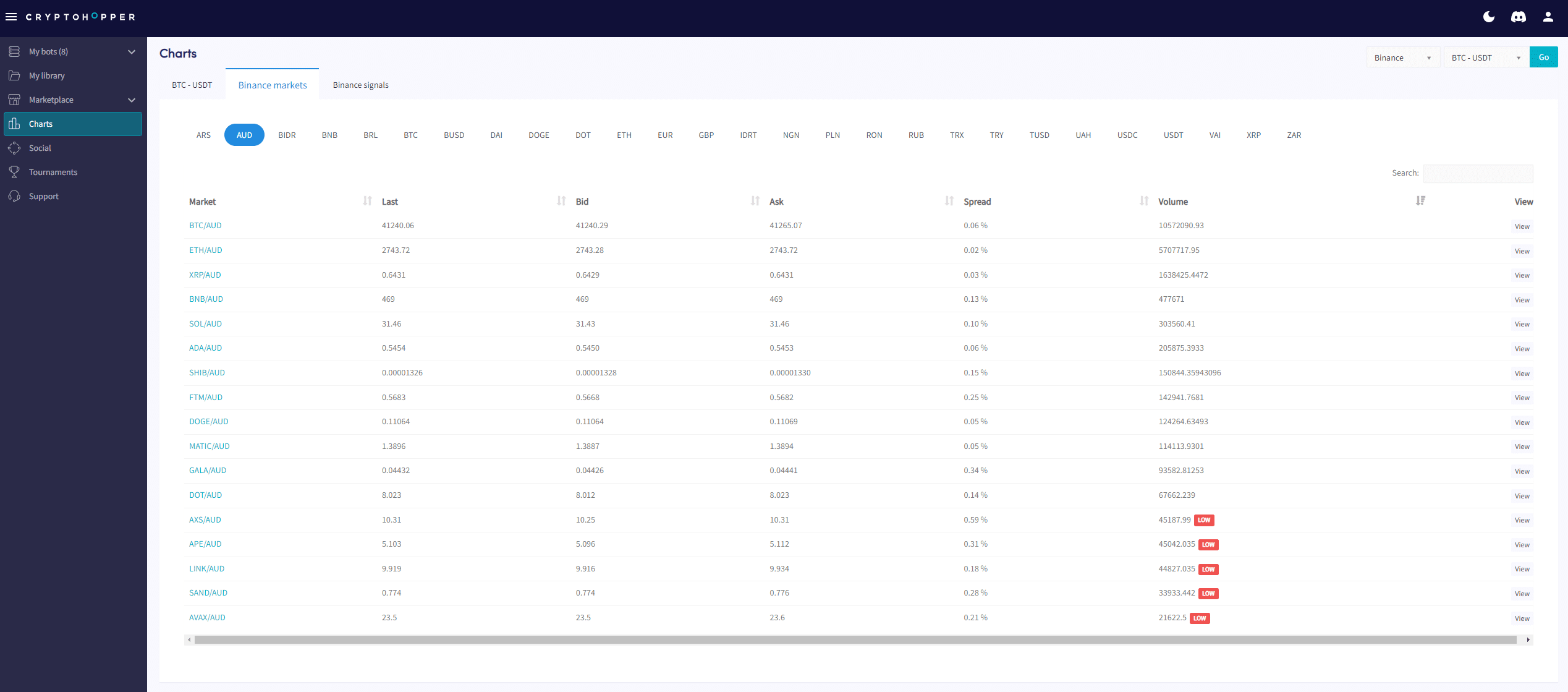
Under the markets tab, you can find the following information:
market
Displays the currencies that can be traded with the selected featured currencies.
last
Displays the last buy or sell price at which the trade was executed.
Demand
Shows the highest rate at which someone is willing to buy the currency at that moment. This means that these orders are the first orders to be filled when a seller places an order in the market. When a limit order has been placed, it can indicate that this order will not be filled because there may be new buyers willing to pay more for the same currency.
proposal
Shows the opposite of the demand curve. It shows the lowest rate someone is willing to sell the currency at that moment. These are also the first orders that will be filled when a buyer places an order in the market. When a limit order has been placed, it can show that this order will not be filled because there may be new sellers who are willing to accept less for the same currency.
gap
This is the difference between the highest bid and the lowest ask. The spread can be particularly useful in determining which currency to choose for the market trading bot. For an explanation of the market trading bot, click here.
volume
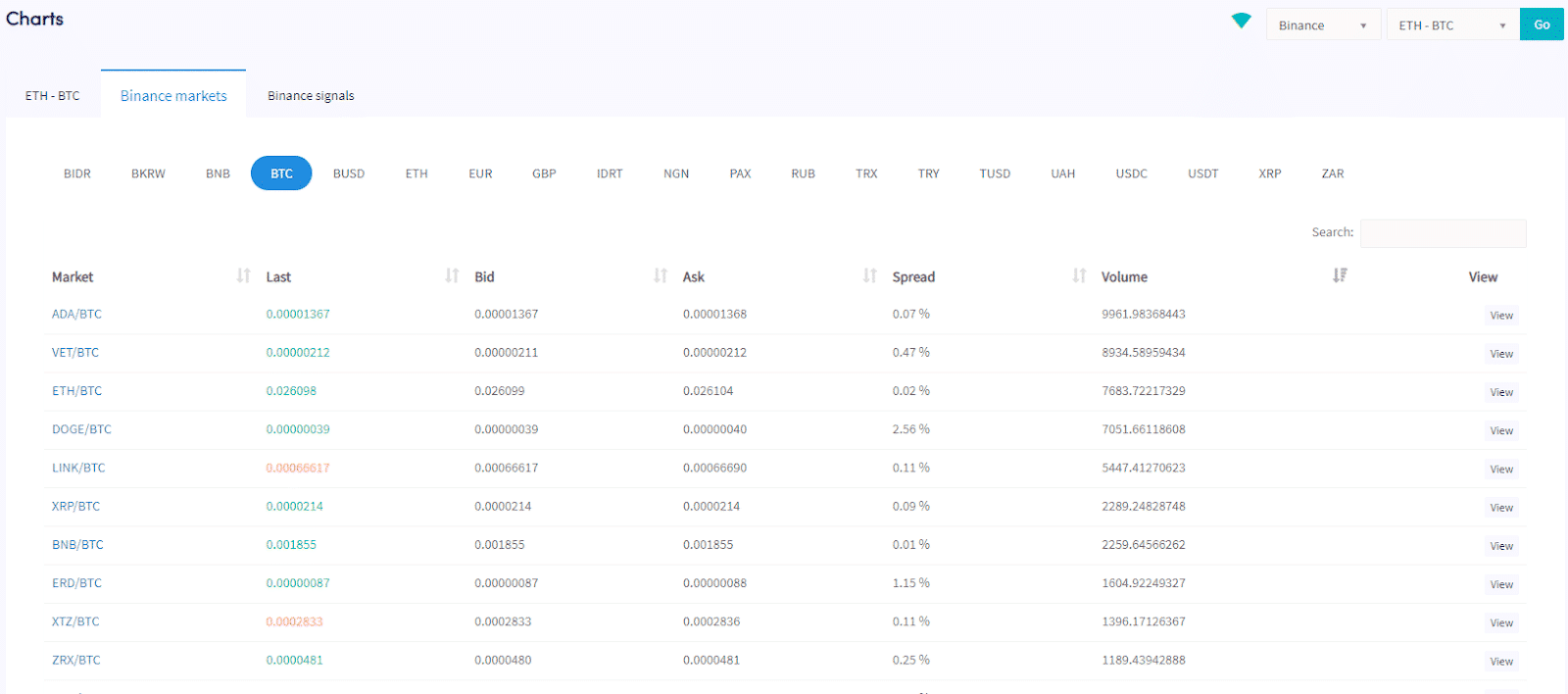
Shown in the offered currency. In the example above, we see that ADA has traded 9,961 BTC in the last 24 hours. When there is high trading volume, there is a high chance that your limited opportunities will be filled. Liquidity is another important metric related to volume. It refers to the size of the opportunities and the buy and sell rates displayed in the order book. It is important to remember that coins that do not have a developed order book can be used as sudden buying and selling schemes. A sudden buying and selling scheme involves buying up the order book of a coin suddenly to cause the price to rise significantly. When other traders experience FOMO (fear of missing out) and place buy orders, the original buyers will then sell their coins and make a profit.
Signals tab
The signals tab can be found at the top of the charts page.
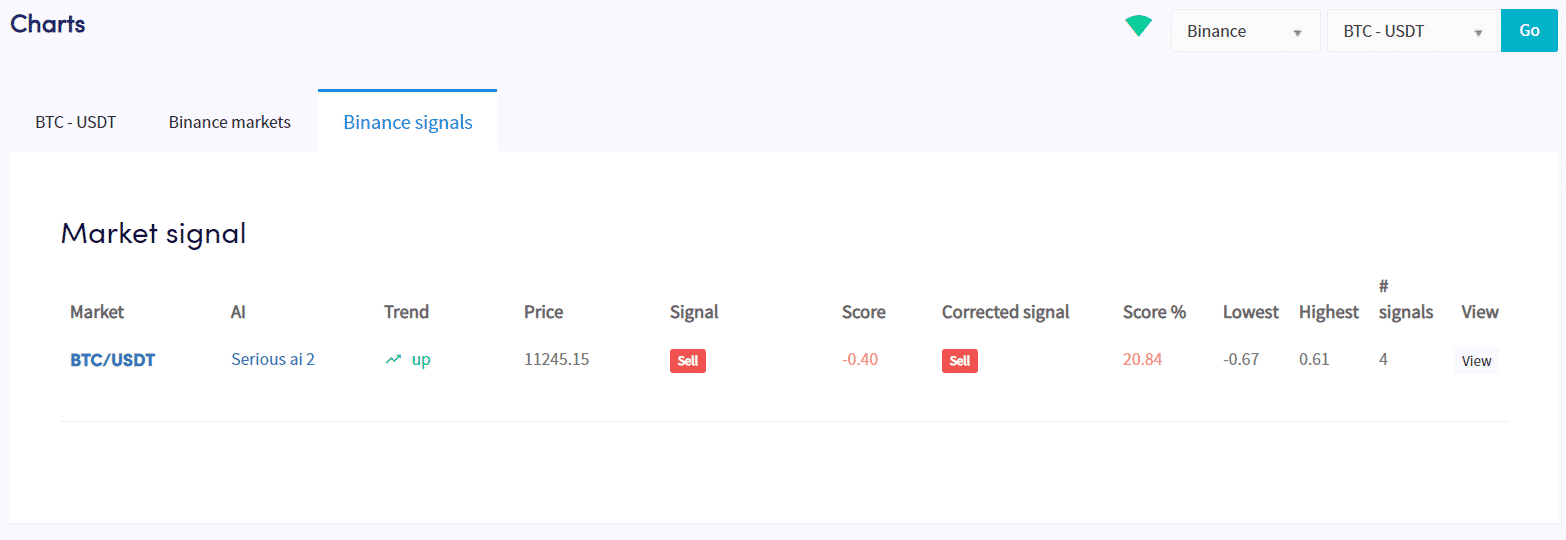
Under the signals tab, you can find the following information:
market
Shows the specific markets that your AI is sending signals to. You will only see the currencies you selected in the base setup. For example, if you selected BTC, ETH, XRP, and LINK in the base setup. You will only see those four currencies when the AI sends a buy or sell signal.
artificial intelligence
Displays the name of the artificial intelligence strategy.
trend
Shows what trend the market is currently in according to your AI strategy. In the example above, you can see that it is uptrending.
price
Shows the current price of the coins at this moment.
signal
Shows whether it is a buy or a sell.
score
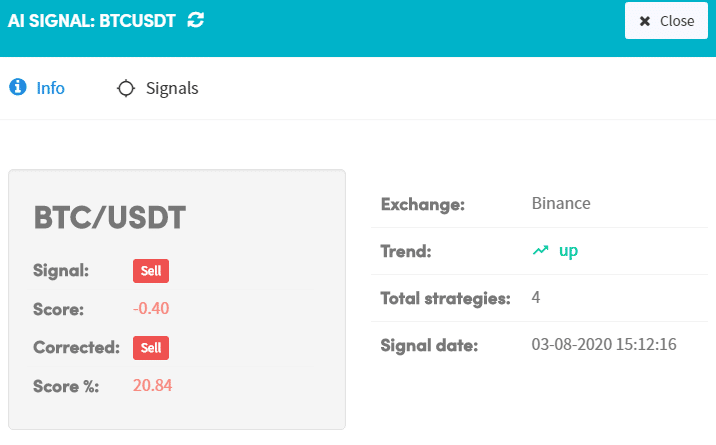
Displays the base value of the letter. Displays the “regular grade” and not the corrected grade.
Corrected signal
Shows whether it is a buy or sell based on your revised score.
Score %
Displays the base value of the corrected signal.
low
Displays the lowest “normal” grade for the letter.
high
Displays the highest “normal” score for the letter.
Signals
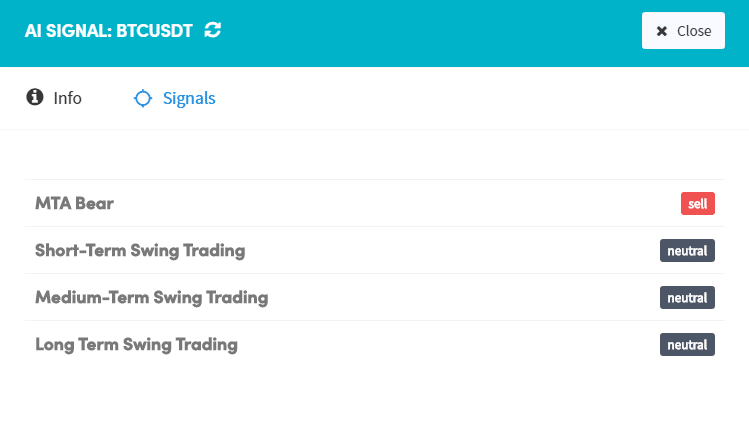
Displays the number of signals given. This number is the same as the number of all your signal strategies. All strategies will provide: Buy, Sell or Neutral.
display
Click here to see all available information.