
How to execute a scalping strategy with AI on Crypto Hopper

This guide presents an example of an AI-based scalping strategy. This is just an example, and independent research should be conducted in any case.
Strategy Review
This is an advanced article about different trading styles using algorithmic intelligence (AI). It is recommended to read the basic documentation on algorithmic intelligence first.
When creating a new AI, it is usually more profitable to use the AI for a specific purpose. For example, you can create an AI dedicated to either Scalping or Swing Trading , but not both at the same time. If a strategy is designed for Scalping, for example, it usually operates on much shorter time frames than a strategy aimed at Swing Trading.
Signal Strategies
First, you need to decide what type of algorithm you want. In this example, we will use the Scalping algorithm , and we will review several Scalping strategies. 3 Scalping strategies have been created in Cryptohopper for ease of use. It is recommended to read the following section, but you can also click on the strategy names to download them directly.
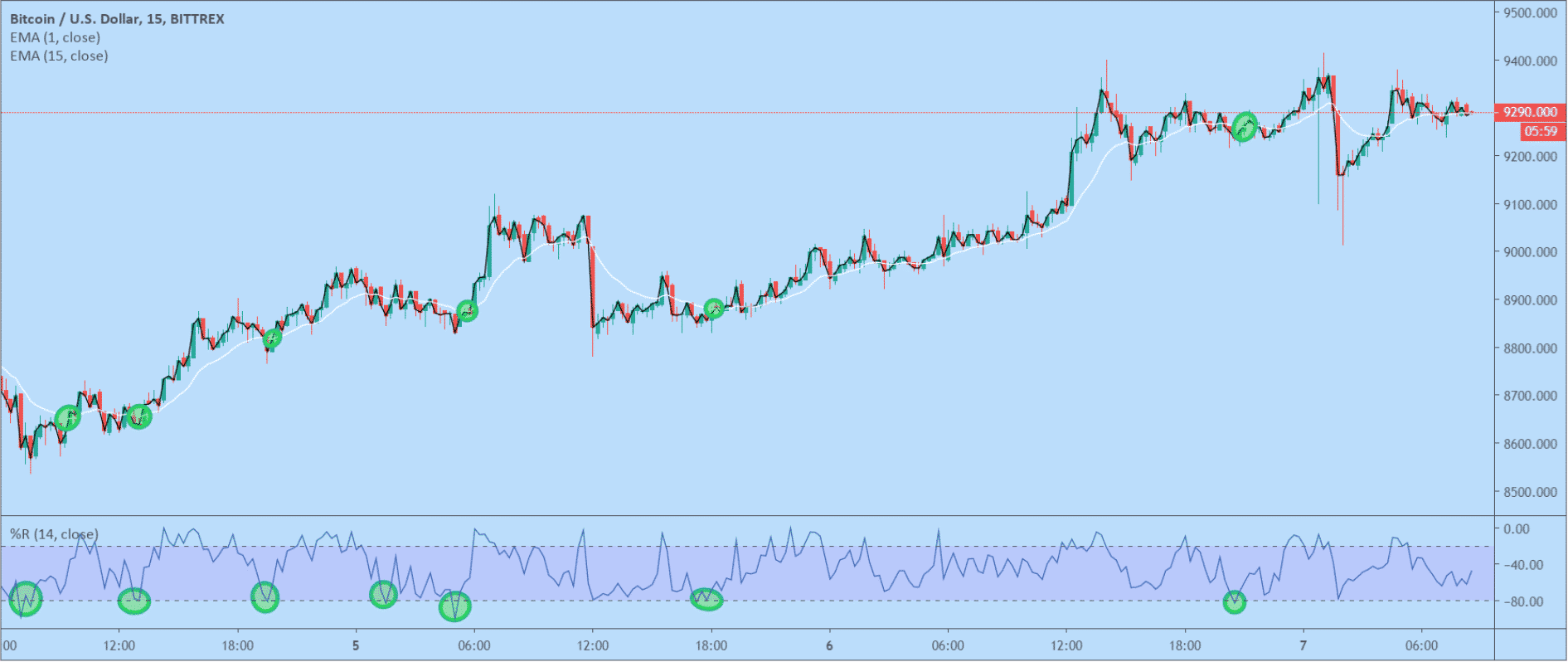
Combining momentum and trend indicators can lead to excellent results. We chose MESA on the 4-hour chart to identify the overall trend. Next, we chose Williams %R to identify when the market is oversold. Finally, we used the 1-15 EMA crossover to determine when momentum is back in our favor. A higher timeframe of 15 minutes is used. For Williams %R as well as for the 1-15 EMA crossover, they tend to give a lot of signals on the 5-minute chart. Important: Williams %R and EMA crossovers are unlikely to give signals at the same time. Therefore, the strategy was designed so that the Williams %R signal is held for 5 candles.
For exits, the following sell settings are used: Take profit 7%, Stop-Loss 1%, Trailing Stop-Loss percentage 1%, and a 1.5% infusion
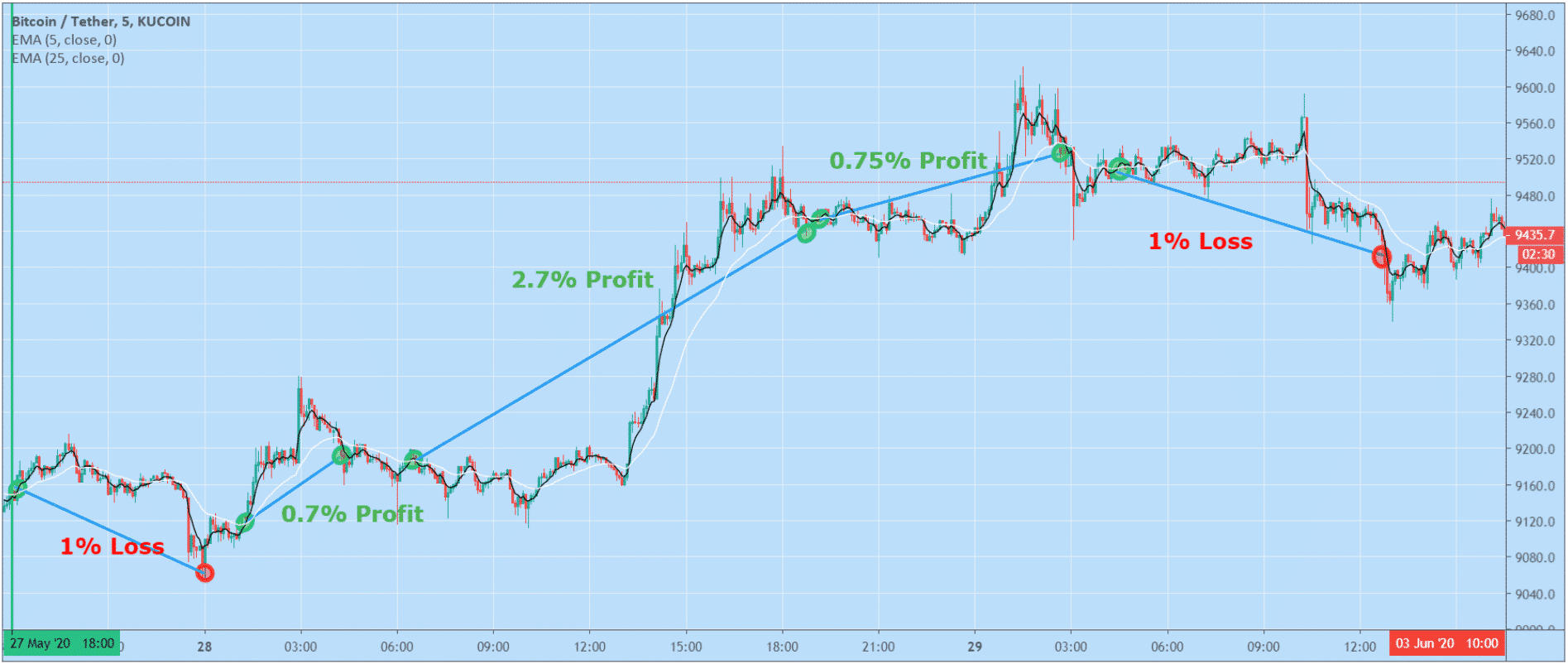
This strategy involves using trend indicators on multiple time frames. It starts by using MESA on the daily and 4-hour charts to make sure the trend is working in our favor. Then, on the 5-minute time frame, there is the transition between the 5 EMA and the 25 EMA.
For this strategy, the same exit settings will be used as the previous strategy: Take profit 7%, Stop-loss 1%, Trailing Stop loss percentage 1%, and a 1.5% infusion.
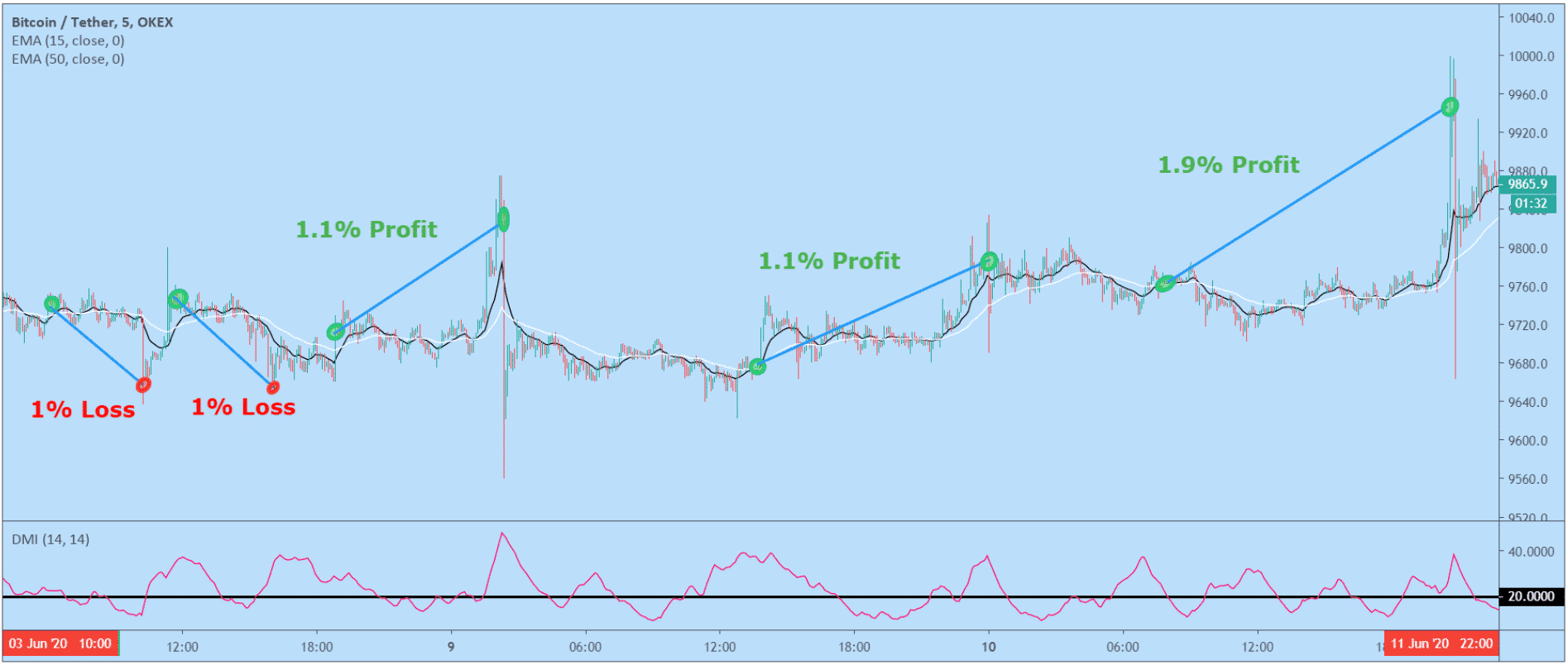
Last time, the strategy uses MESA on the 4-hour chart to determine the trend direction. The transition between the 15 and 50 EMA on the 5-minute chart and the ADX value greater than 20 are used to determine the entry.
For exits, the following sell settings are used: Take profit 5%, Stop-Loss 1%, Trailing Stop-Loss percentage 0.5%, and a 1.5% infusion
Trend strategy
Trend strategies should generally continue to obtain buy signals in uptrends and sell signals in downtrends. The Parabolic SAR on the daily chart is a good example. It keeps buying/selling signals in line with the trend. However, if you add the Parabolic SAR on several chart periods with the “Needed Signal” option active for one of the chart periods, then you will also get neutral signals. Based on this, a simple Parabolic SAR strategy is created on the daily timeframe. This way it will not produce any neutral signals.

Now we will add them to the new AI to test how they work. Remember to click Save after adding all the desired strategies.
Strategy definition
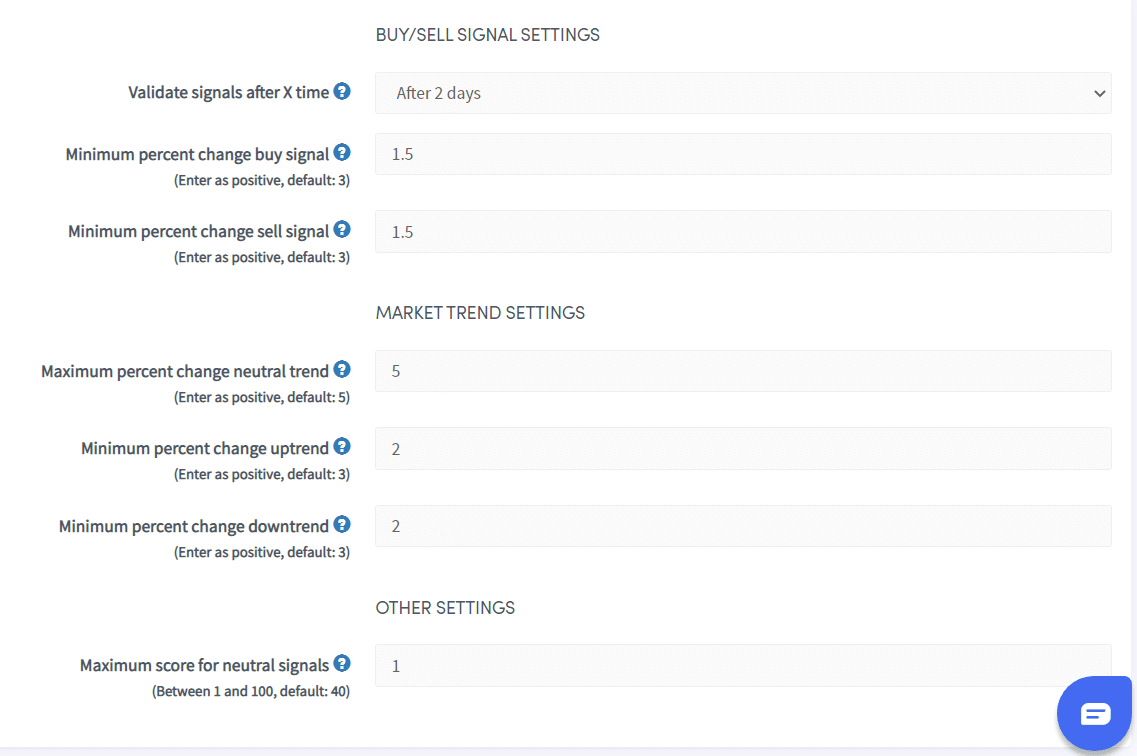
We will use the following settings:
Signal verification after X time
Scalping is usually done within 24 hours. This is a short-term trade. Due to low volatility, one day may be too short to reach the profit target. So choose 2 days.
Minimum percentage change for a buy signal
All our strategies are based on Trailing Stop-Loss with a 1.5% infusion. Therefore, we will use 1.5%, because this is the minimum threshold for a positive trade.
Minimum percentage change for a sell signal
Here too, we chose 1.5%. In our strategy, this is not important, because we do not use sell signals. We execute a sale with the sell settings.
Maximum percentage change to neutral trend
We will use the default settings of 5%. This is not important because we are using a trend strategy that does not provide any neutral signals.
Minimum percentage change in an upward trend
We will use 2% here. The trend strategy should have more significant movement than the strategy itself.
Minimum percentage change in a downward trend
We will use 2% here. The trend strategy should have more significant movement than the strategy itself.
Maximum score for neutral signals
We’ll use 1 here. It doesn’t matter, because we’re not using neutral signals.
Training

Since we only analyzed how the strategies behave on BTC/USDT, we chose the BTC/USDT pair to achieve the highest accuracy. Since these are scalping strategies, we will still have enough signals to get an accurate picture of their performance.
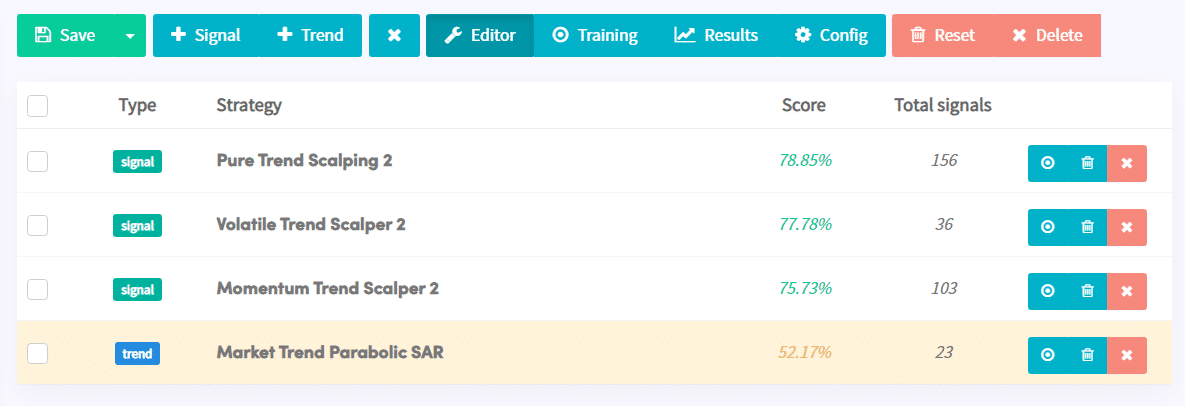
When the training is complete, you can see the results. The Scalping strategy worked well. More than 75% of the trades achieve the 1.5%
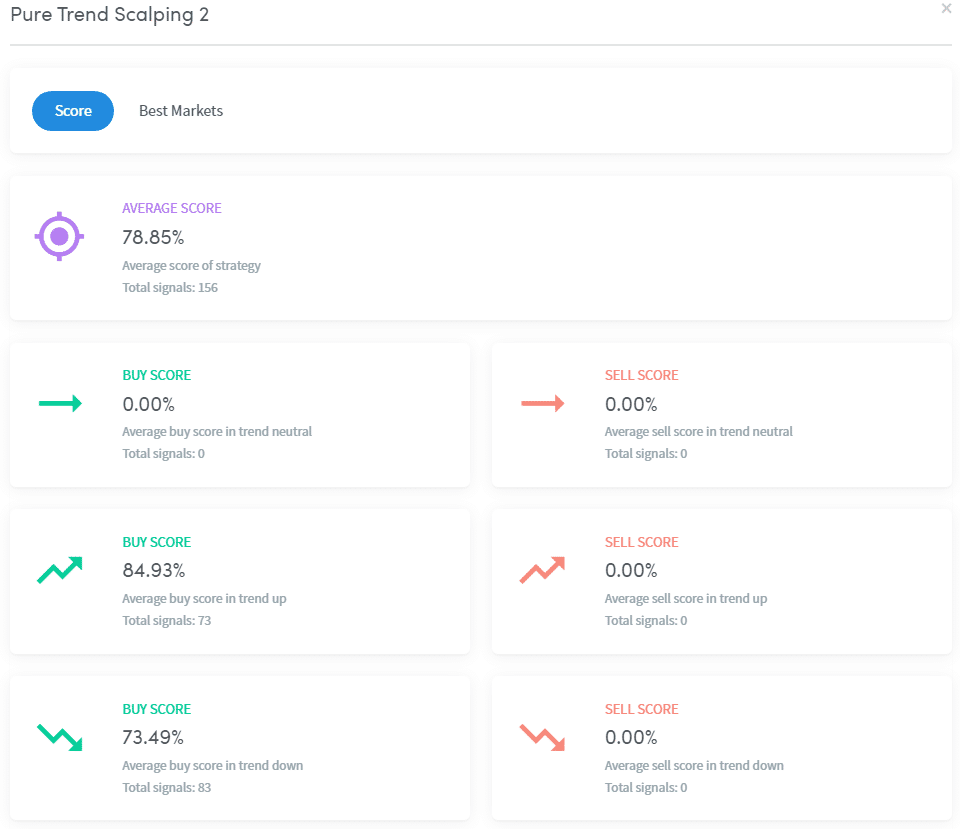
Get a lot of signals. Almost 200 in total. You can click on the strategies to see the details. You can see that the winning percentage is higher in an uptrending market than in a downtrending market (that’s why there were signals pointing to MESA as a filter initially).

This can also be seen in the results by “Trend” in the “Results” section. Uptrend signals are about 20% higher in percentage than downtrend signals.
Base definition
Purchase settings
Order type
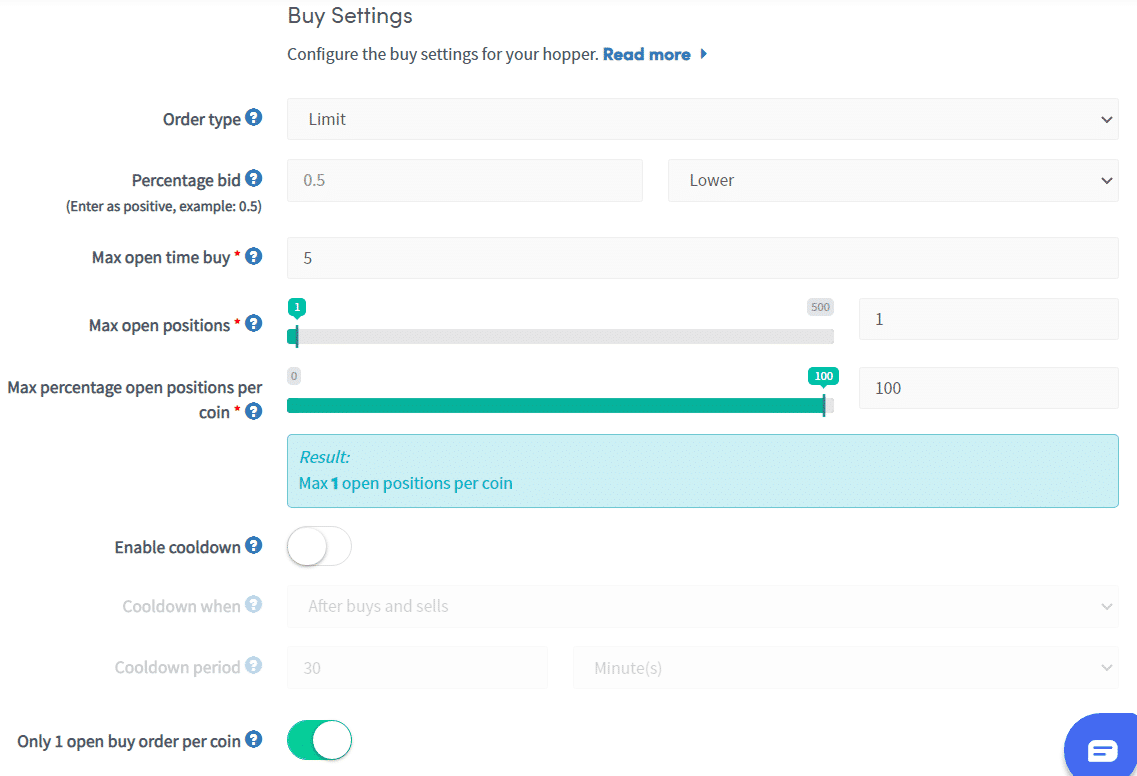
Limit orders are used because we have a scalping bot. When the buy comes in, a small difference of 0.01% per trade is significant.
Maximum opening time for booking
We’ll use 5 minutes. We don’t want to enter a trade an hour after we’ve found the opportunity.
Maximum open positions
We will use 1 because we are only trading against BTC and not using DCA. When trading more currencies, you can choose more. “Maximum Open Percentage per Currency” and “Open only 1 position per currency” were also selected accordingly.
Currencies and amounts
Currency Quote
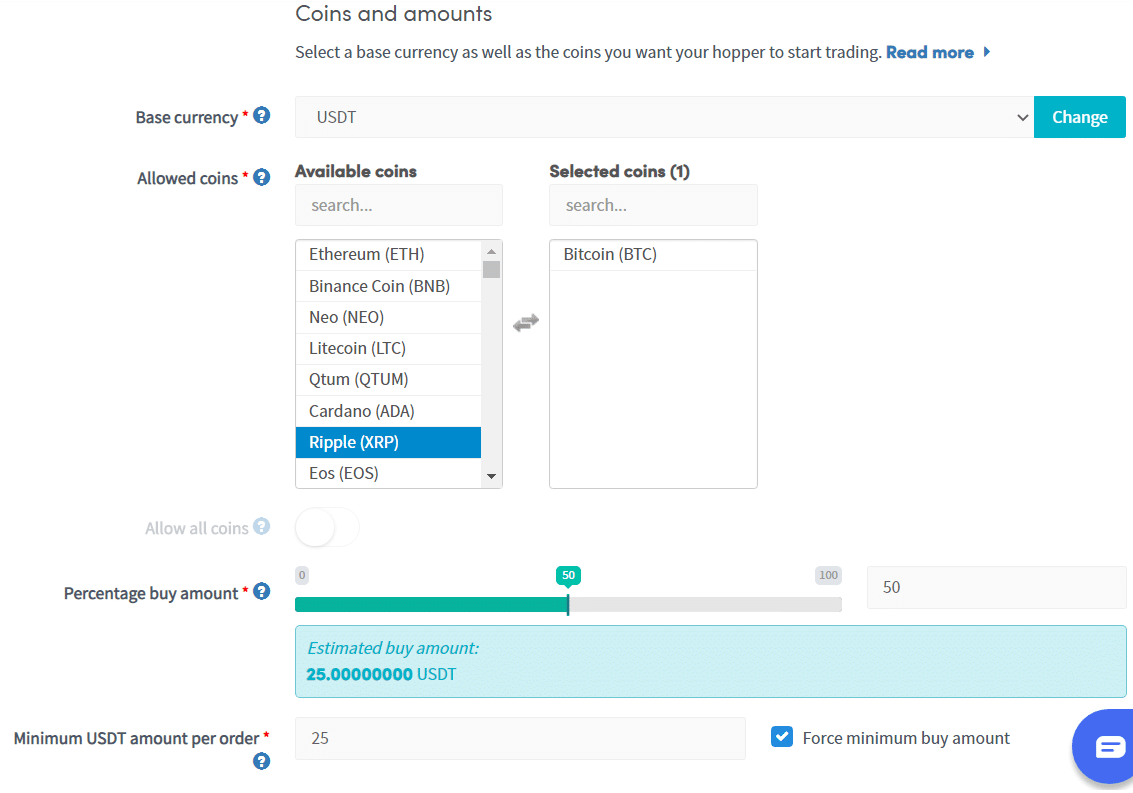
USDT is used because our AI trained our strategies against USDT.
Percentage of purchase amount
We have configured it to only open 1 position at a time on BTC, so we are using 50% here. If you are new to Cryptohopper and trading, it is a good idea to choose a smaller percentage. This way you can learn before risking large amounts of your capital. You can also trade with all your capital at once. If you do this, make sure to choose 98%, not 100%. You must leave funds available for fees.
Minimum USDT amount per order
Fill in an amount greater than the minimum required by your exchange.
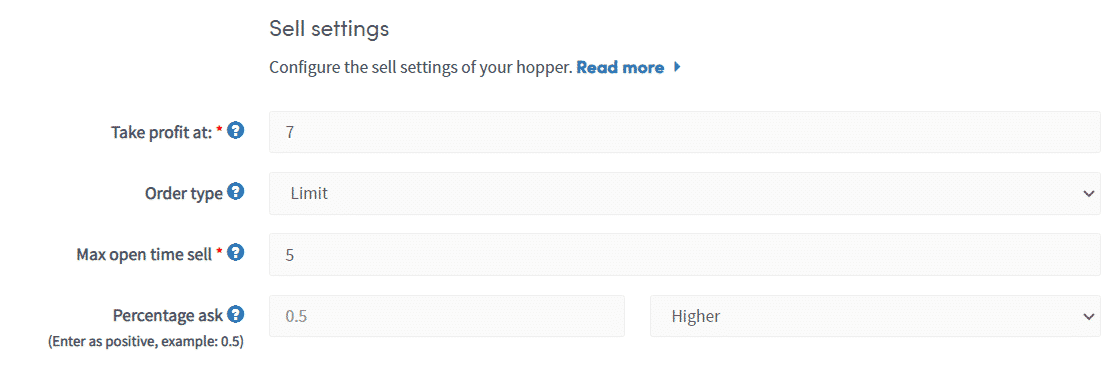
Sales settings
Take profit
A 7% “Take profit” is used for most strategies. The Scalping bot also uses this.
Order type
We use limit orders because we have a scalping bot. With scalping, a small difference of 0.01% per trade is significant.
Maximum opening time for sale
5 minutes is used. If the bot fails to sell the position within 5 minutes at a certain price. We want the order to be canceled and try to sell again at a different rate.
Stop Loss
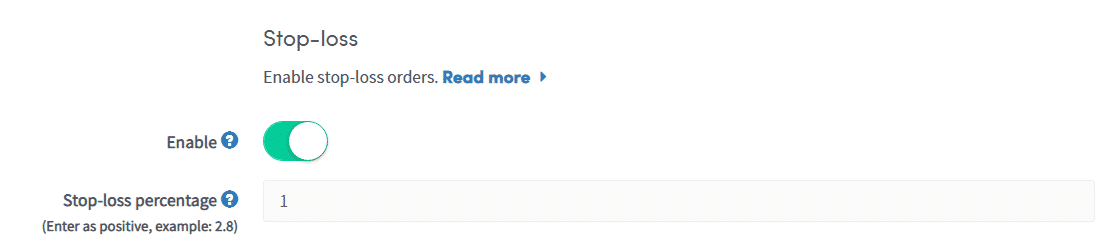
Stop Loss
1% is used. Same percentage used for the strategies. You can check broader definitions and see how it works.
Trailing Stop Loss
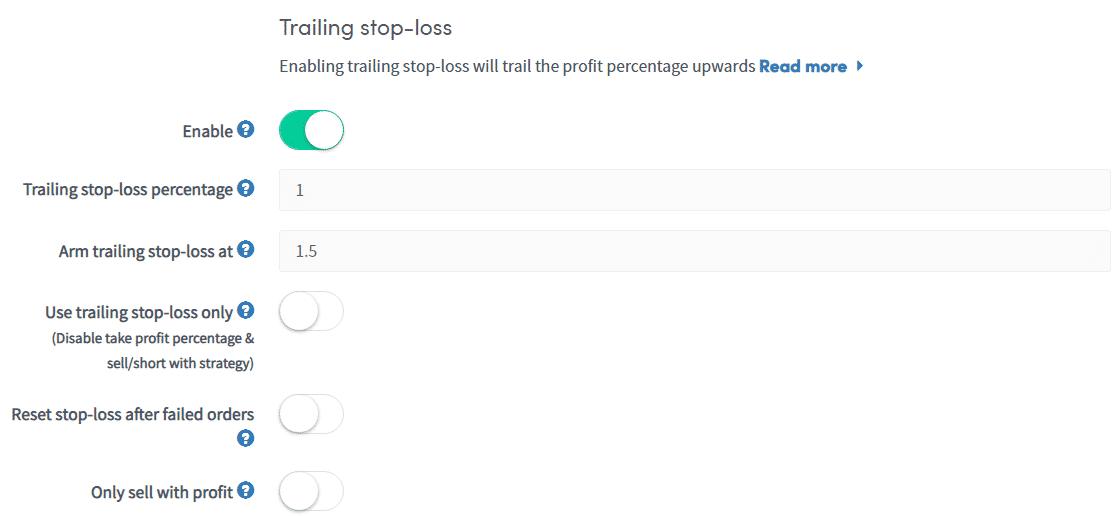
Trailing Stop-Loss Percentage
1% is used. This gives the coin room to grow but also to accumulate profits once it is stocked. Need at least 1.5% at the infusion level and use an exchange with low fees.
Trailing Stop-Loss Infusion
We used 1.5%. The AI training is done with 1.5% and our algorithm is based on our strategies that reach 1.5% every time.
Strategy settings
strategy
Select the AI you created and trained. Using the “Scalping Bot Example”.
Signals only
The goal is to use AI, so it’s turned off.
Several goals for acquisition
1 is used because there is 1 open position at a time and in currency 1.
Using a revised score for purchases/sales
“Yes” is usually the best choice here. It takes into account real-time data and allows your AI to improve. That’s why “Yes” is used.
Minimum score for purchases/sales
A good choice here is around 80%. You want to be selective with the signals your AI acts on for optimal profitability.