
Books> Statistics for beginners
Different types of bells
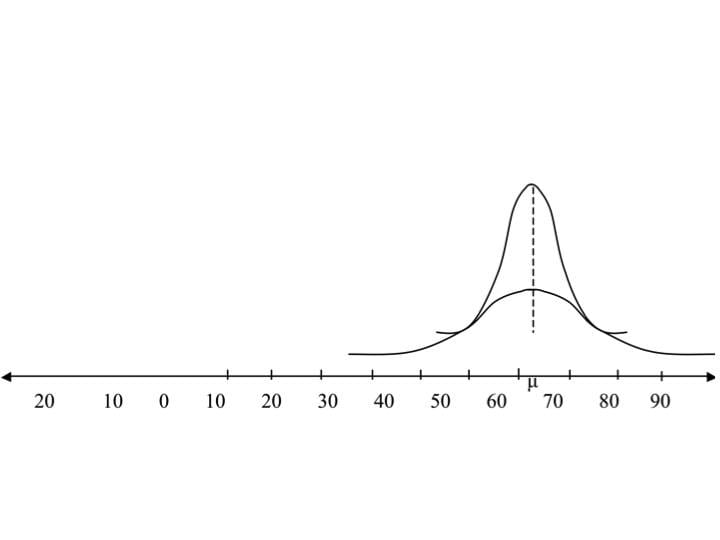
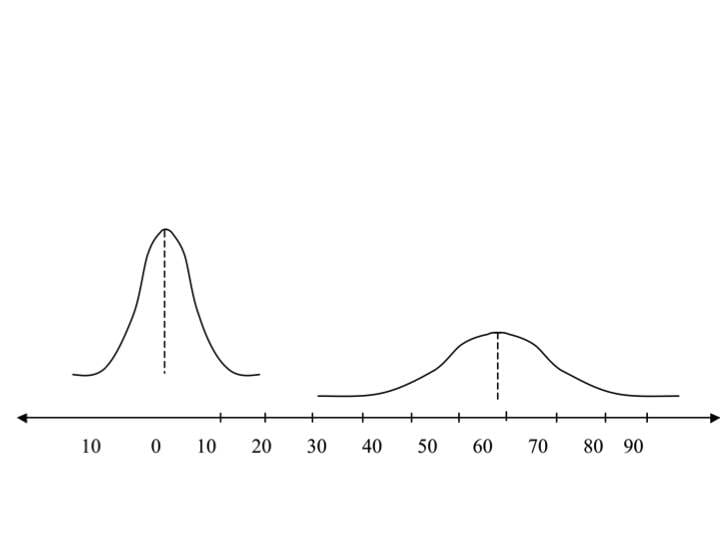
- The position of μ on the number line.
- The degree of curvature of the bell: is it narrow and high or wide and low?
Examples of differences in bells:
Example 1: Two bells with the same convexity but different positions:
Example 2: Two bells with the same position but different convexity
Example 3: Two bells that differ from each other in two features: position and curvature.
The degree of curvature of the bell reflects the degree of dispersion of the distribution. The narrower and taller the bell, the more results are close to the expectation, and the meaning is low dispersion. The wider and lower the bell, the more dispersed the results. The statistical measure of the degree of dispersion is the standard deviation . Distributions with a small standard deviation reflect narrow and tall bells. Distributions with a large standard deviation reflect wide and low bells.