
Common mistakes when setting up a Google Ads campaign and how to avoid them
Investing in Google Ads campaigns
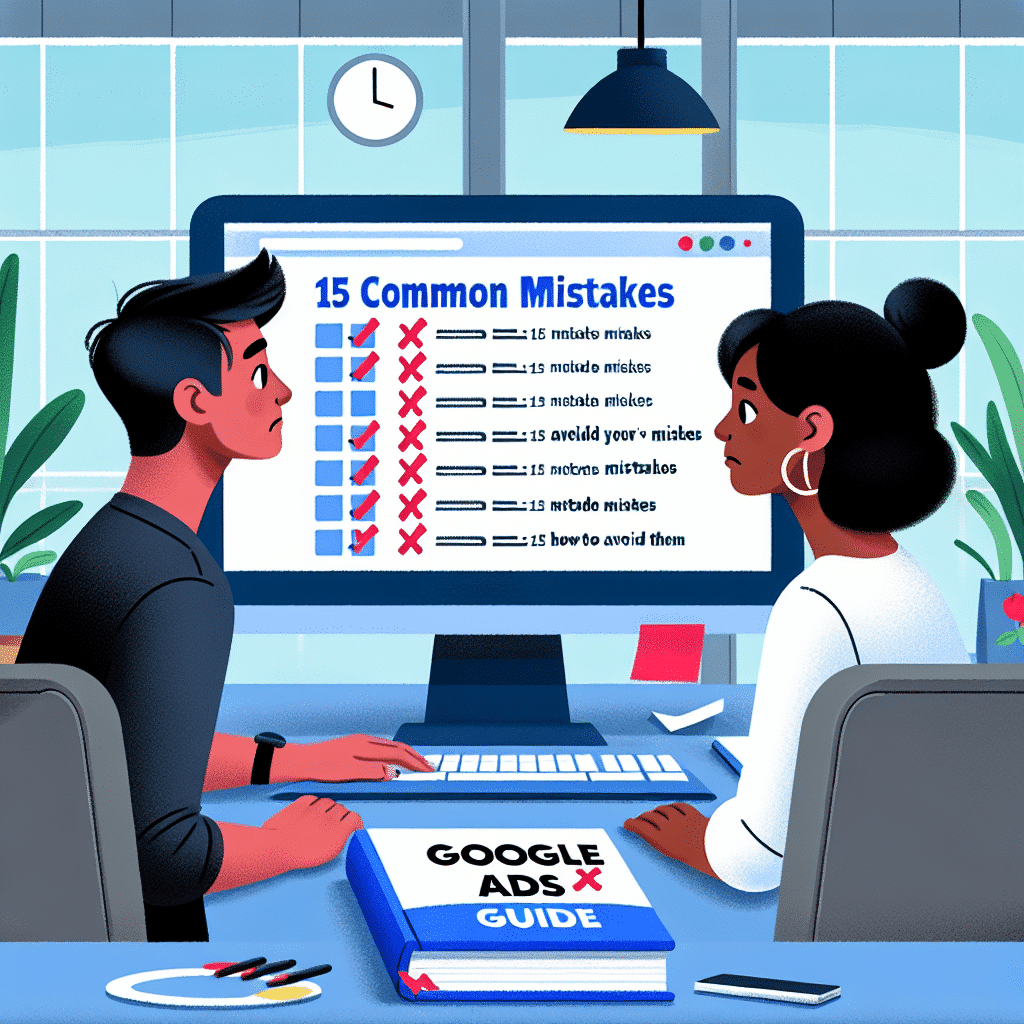
Investing in Google Ads campaigns can be expensive and complex. Small mistakes can result in significant financial losses and lack of desired results. In this article, we will discuss 15 common mistakes that users make when setting up a Google Ads campaign, and offer tips on how to avoid them.
1. Defining untargeted keywords
A common mistake is choosing keywords that are too general, which can attract untargeted traffic to your site. Choose keywords that are specific and relevant to your products or services.
2. Ignoring the use of negative words
Negative keywords help prevent ads from showing on irrelevant searches. Use negative keywords to reduce unwanted traffic and improve conversion rates.
3. No geographic targeting is defined
Many people forget to set the geo-targeting of their campaign. Ignoring this can lead to unnecessary traffic from locations that are not relevant to your target audience.
4. Using an unadjusted daily budget
Setting a daily budget that is too low or too high can hurt your campaign performance. Check your keyword costs and adjust your budget accordingly to avoid wasting money.
5. Neglecting A/B testing
A/B testing helps you decide which ads work best. If you don’t test, you could be missing out on valuable information about what works and makes money for your business.
6. Ignoring Scheduled Ad Management
The hours your ads run are important. Target customers may be more active at certain times of the day or days of the week. Set a schedule based on data analysis.
7. Neglecting landing pages
If your ads link to landing pages that are irrelevant or of poor quality, the effectiveness of your campaign will suffer. Make sure the page is relevant to what the ad is offering and is inviting to the visitor.
8. Not using ad extensions
Ad extensions enrich your ad with additional information that can encourage customers to click on it. Try using extensions like phone number, address, and promotions.
9. Over-focusing on clicks only
Clicks aren’t the only measure of success. Also measure conversions, revenue, and traffic quality to understand the full picture of campaign performance.
10. They don’t track conversions
Without conversion tracking, it’s hard to know if your campaign is driving real results. Set up tracking to measure actions like sales, signups, and more.
11. Ignoring competition
Competition is part of the advertising world. Check out how your competitors operate and get ideas to improve your campaigns.
12. Setting up one campaign for all products
Combining all products into one campaign can be risky. It is better to split into separate campaigns based on product categories or types.
13. Failure to monitor performance
Make changes to your campaign and analyze results regularly. This way you can avoid continuing to invest in unsuccessful campaigns.
14. Neglecting the quality of ad content
An unclear or uninteresting ad message will work against you. Write engaging and clear content that motivates action.
15. Not identifying the right audience
You need to know your target audience in order to create accurate and effective campaigns. Analyze your audience and focus on their needs and preferences.
Running a successful Google Ads campaign requires attention to detail. Avoid these common mistakes and use these tips to improve performance, increase traffic, and achieve your business goals.
Understanding the Google Ads system
To be successful with Google Ads campaigns, it’s important to understand the system itself. Google Ads is an advertising platform that allows businesses to display ads on the Google search engine and on various websites across the Internet. The system operates on a pay-per-click (PPC) model, where the advertiser pays for each click on their ads.
How does Google Ads work?
Google Ads works on the basis of advanced algorithms that match the keywords the advertiser chooses with user searches. When a user searches for a particular word or phrase, Google checks which ads match that search and displays the relevant ads.
Steps to setting up a Google Ads campaign
- Select the campaign type: Search, Display, Video, or Shopping.
- Set your goals: Do you want to increase sales, increase website traffic, or gain leads?
- Choose relevant keywords.
- Write compelling ads.
- Set a daily budget.
- Select the geographic focus.
- Set up conversion tracking.
The importance of monitoring and analysis
One of the most common mistakes is not tracking campaign performance. It’s important to track metrics like click-through rate (CTR), cost per conversion (CPA), and profitability. Analyzing this data can help you understand what’s working and what’s not, allowing you to make continuous improvements.
Data analysis tools
- Google Analytics – An important tool for analyzing website traffic.
- Google Ads Reports – Reports that provide information about campaign performance.
- External tools – There are additional tools that can help with data analysis.
summary
Google Ads campaigns can be a powerful tool for growing your business, but they need to be run correctly. Avoid the common mistakes mentioned in the article, invest time in learning about the system, and don’t forget to analyze your performance regularly. With the right approach, you can achieve impressive results and increase your revenue.